Quick Answer
You can tow a car long distance with a tow dolly, full car trailer, flat-towing setup, or professional auto transport. General U.S. costs can range from about $300 to $1,500+, depending on distance, vehicle, equipment, route, and service.
How Do You Tow a Car Long Distance?
Moving a car hundreds or thousands of miles requires more than connecting it to a truck. You need a towing method that matches the car, a tow vehicle and equipment with the proper ratings, secure vehicle loading, and a plan for fuel, breaks, traffic, and road conditions.
For a state-to-state car towing move, you can handle the trip yourself with a compatible trailer or dolly, or arrange professional auto transport. The right choice depends on the car, distance, total cost, and how much work you want to manage.
What Are the Best Ways to Tow a Car Long Distance?
Tow Dolly
A tow dolly lifts two wheels off the road while the other two remain on the pavement. It can be a practical option for certain cars, but compatibility depends on the vehicle's drivetrain and manufacturer requirements. A tow dolly may work well for some front-wheel-drive cars, while AWD and certain rear-wheel-drive vehicles may require a different method. Always check the owner's manual before starting out-of-state towing.
Full Car Trailer
A full car trailer carries all four wheels off the road and generally offers broader compatibility. It can be useful for longer trips when you want the car completely supported by the trailer.
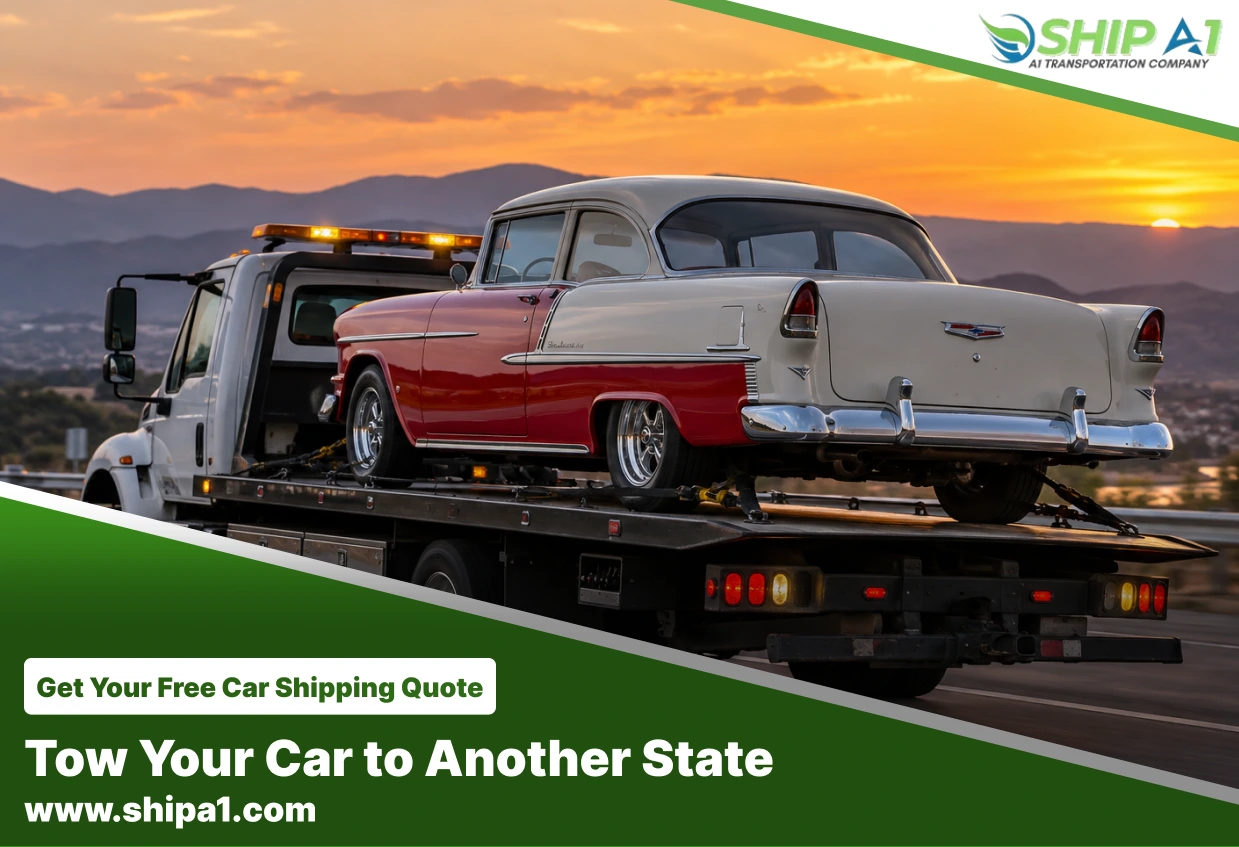
Long-distance flatbed towing can also provide a similar all-wheels-off-the-road approach for vehicles requiring specialized handling.
The main drawback is that you need a properly rated tow vehicle, trailer, hitch, straps, brakes, and other equipment.
Flat Towing
Flat towing keeps all four wheels on the road while the car is connected to the tow vehicle. It is only suitable for vehicles approved for this type of towing. This method can be convenient when the vehicle manufacturer permits it, but improper setup can cause drivetrain damage. Always follow the vehicle manufacturer's instructions.
Professional Auto Transport
Professional auto transport is an alternative to driving a loaded tow vehicle across the country. It can be particularly convenient for long distance car towing situations where the owner does not have suitable towing equipment. For everyday cars, open car transport is generally the more budget-conscious option. Enclosed auto transport provides additional protection from weather and road debris and can be suitable for luxury, classic, exotic, and high-value cars.
Ship A1 Auto Transport also offers door-to-door auto transport, terminal transportation, and expedited car shipping.
Which Method Is Best for State-to-State Car Towing?
Which Method Is Best for State-to-State Car Towing?
| Method |
Best For |
Main Advantage |
Main Limitation |
| Tow dolly |
Compatible cars |
Lower equipment cost |
Limited compatibility |
| Full car trailer |
Broad range of cars |
All four wheels off road |
More equipment required |
| Flat towing |
Approved vehicles |
No trailer required |
Highly vehicle-specific |
| Open auto transport |
Most everyday cars |
Convenient and widely available |
Exposed to weather |
| Enclosed transport |
Luxury and high-value cars |
Greater protection |
Higher cost |
For towing from state to state, the best method is the one that matches the car's drivetrain, weight, condition, and the towing equipment. A method that works for one car may not be appropriate for another.
How Much Does Long-Distance Car Towing Cost?
The cost of towing long distance varies by mileage, route, car type, towing method, equipment, and provider. General U.S. planning figures can range from about $400 to $1,000+ for trips over 200 miles, while some towing providers use rates of approximately $2.50 to $7.00 per mile plus a $75 to $125 hookup fee.
For general planning:
- Under 500 miles: about $300-$600
- 500-1,500 miles: about $600-$900
- Over 1,500 miles: about $900-$1,500+
These figures are general estimates rather than guaranteed prices. Your final cost can change according to vehicle type, route, equipment, timing, accessibility, and provider.
Ship A1's enclosed transportation is generally more expensive than open transport. General planning figures can range from approximately $500 to $1,500+, or around $1.00 to $1.40+ per mile, depending on the shipment.
For additional pricing information, see our guide to the cost to ship a car to another state.
What Is the Cheapest Way to Tow a Car Long Distance?
The cheapest way to tow a car long distance may be a tow dolly when the vehicle is compatible and you already have a properly rated tow vehicle. However, equipment rental is only one part of the total cost.
DIY out-of-state car towing can also involve fuel, tolls, lodging, meals, equipment, rental mileage, and wear on the tow vehicle.
For a very long trip, professional transportation may be more convenient and potentially more economical after all travel expenses are considered. This is why it is useful to compare the complete cost rather than only the trailer or dolly rental price.
How to Tow a Car With a Truck Long Distance
If you plan to tow a car with a truck long distance, start with the ratings rather than the distance.
Check the truck's:
- Towing capacity
- GVWR
- GCWR
- Payload
- Hitch rating
- Tongue-weight limit
Then verify the capacity of the trailer or tow dolly. You should also check tire ratings, trailer brakes, safety chains, straps, and lighting.
For commercial towing configurations, federal CDL requirements can depend on the weight ratings of the combination. According to FMCSA guidance on tow-truck CDL requirements, a Class A CDL is generally required when the combination has a GCWR of at least 26,001 pounds and the towed vehicle alone exceeds 10,000 pounds GVWR. Different rules can apply depending on the configuration and whether the vehicle is used commercially, and state requirements should also be checked.
For most personal car owners, the key point is simple: never exceed the tow vehicle, hitch, trailer, or tire ratings.
Towing Across State Lines: What Should You Check?
Towing across state lines can involve different road, equipment, and licensing requirements. Before leaving, confirm that your setup meets the applicable requirements for the states on your route. Lighting and safety equipment also matter. FMCSA's commercial safety guidance includes requirements for trailer and vehicle lighting, including stop lamps, lamps, and reflectors.
If you are using a long distance towing company, ask what equipment will be used, whether the car is compatible, what is included in the quoted price, and how pickup and delivery will work.
How to Prepare a Car for Long-Distance Towing
Before loading or connecting the car, check the tires, battery, fluids, and exterior condition. Remove personal belongings and secure loose exterior accessories. Take photos of the vehicle before transportation so you have a record of its condition.
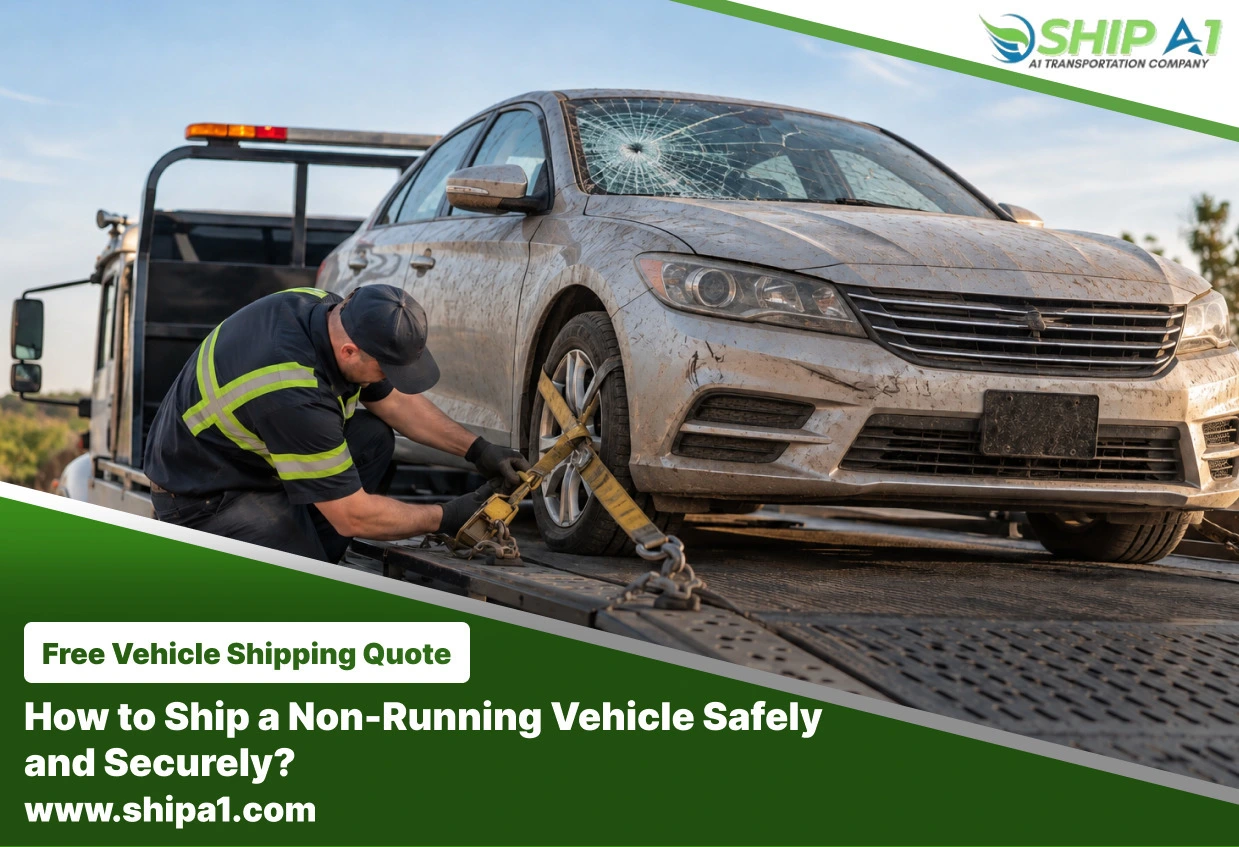
For an inoperable car, additional loading equipment may be necessary. Ship A1 provides guidance on how to ship a non-running vehicle safely and securely.
Long-Distance Towing Safety Tips
Long-distance vehicle towing requires regular equipment checks. Before departure, inspect the hitch, safety chains, straps, trailer tires, brakes, and lights. While driving, leave more stopping distance than normal and avoid sudden steering or braking. Trailer sway, traffic, weather, steep grades, and road conditions can all affect the trip.
For long distance truck towing, make periodic stops to inspect the connection and equipment rather than assuming everything will remain secure throughout the journey.
Towing a Car vs. Shipping a Car Long Distance
Towing a Car vs. Shipping a Car Long Distance
| Factor |
DIY Towing |
Professional Auto Transport |
| Equipment |
You rent or provide it |
Carrier provides it |
| Driving |
You drive the tow vehicle |
Carrier handles transit |
| Time |
Requires a road trip |
You travel separately |
| Planning |
More responsibility |
Carrier manages logistics |
| Compatibility |
Equipment-dependent |
Multiple transport options |
| Convenience |
More hands-on |
Less owner involvement |
DIY towing can make sense when you own a capable truck, have the right equipment, and are comfortable completing the trip.
A professional long distance auto towing or auto transport service may make more sense when you do not have suitable equipment, the route is cross-country, or you simply do not want to spend days driving a loaded vehicle.
What Auto Transport Options Does Ship A1 Offer?
Ship A1 Auto Transport can arrange transportation for standard cars, luxury cars, classic cars, hybrids, EVs, and other passenger vehicles.
For special vehicles, you can explore classic car transport services, luxury car enclosed transport, and electric car shipping services. If you prefer pickup and delivery as close to your requested addresses as safely and legally possible, door-to-door auto transport is an option. Terminal auto car shipping may be useful when terminal locations are more practical. For urgent moves, expedited car shipping can provide accelerated pickup and shorter transportation windows.
Ship A1 Auto Transport acts as a licensed broker and arranges transportation with an assigned physical carrier. The carrier provides the primary transit insurance and cargo liability coverage during transportation. Personal belongings left inside the car are generally not covered.
At pickup, existing damage should be recorded on the Bill of Lading. Inspect the vehicle again at delivery and note any new damage. Damage claims should be directed to the transporting carrier.
How Long Does It Take to Tow a Car Long Distance?
The time required for DIY towing depends on mileage, driving hours, fuel stops, breaks, traffic, weather, and inspections. A 1,000-mile trip is not simply a matter of dividing the mileage by highway speed because towing generally requires more cautious driving and additional stops.
For professional transportation, Ship A1 Auto Transport planning information places short-distance shipments at approximately 1-3 days, while cross-country transportation can take roughly 2-9 days, depending on route and shipment details.
Conclusion
There is no single solution for every long-distance towing situation. A tow dolly, full trailer, or flat-towing setup can work when the car and equipment are compatible, while professional auto transport can reduce the driving, equipment, and planning required.
For towing out of state, consider the vehicle's compatibility, total trip cost, route, safety requirements, and your available time. Ship A1 can arrange open, enclosed, door-to-door, terminal-to-terminal, or expedited car transport based on your move.
Frequently Asked Questions About Towing a Car Long Distance
What is the best way to tow a car long distance?
The best method depends on the car, drivetrain, weight, distance, equipment, and budget. A tow dolly, trailer, flat towing, or professional auto transport can each be appropriate in different situations.
What is the cheapest way to tow a car long distance?
A tow dolly can have a lower equipment cost for a compatible vehicle, but fuel, lodging, tolls, rental fees, and other trip expenses should be included when comparing the total cost.
Can I tow a car to another state?
Yes. Car towing to another state is possible with compatible equipment and a properly rated tow vehicle. Check applicable state requirements before traveling across state lines.
Can I use a tow dolly for an AWD car?
Not always. AWD vehicles can have specific towing requirements, and incorrect towing can damage the drivetrain. Check the owner's manual before using a dolly.
What should I look for in long-distance towing companies?
Compare equipment, vehicle compatibility, pricing, insurance or coverage, pickup and delivery procedures, and customer reviews. For a towing company from state to state, confirm exactly what is included before booking.
Is it cheaper to tow a car or ship it?
It depends on the entire trip. DIY towing includes equipment, fuel, tolls, lodging, time, and vehicle wear. Professional transport pricing depends on the car, route, service type, and carrier availability.
Can an inoperable car be transported long distance?
Yes. An inoperable car can require specialized loading and securing equipment, so tell the transportation provider about its condition before booking.