Quick Answer
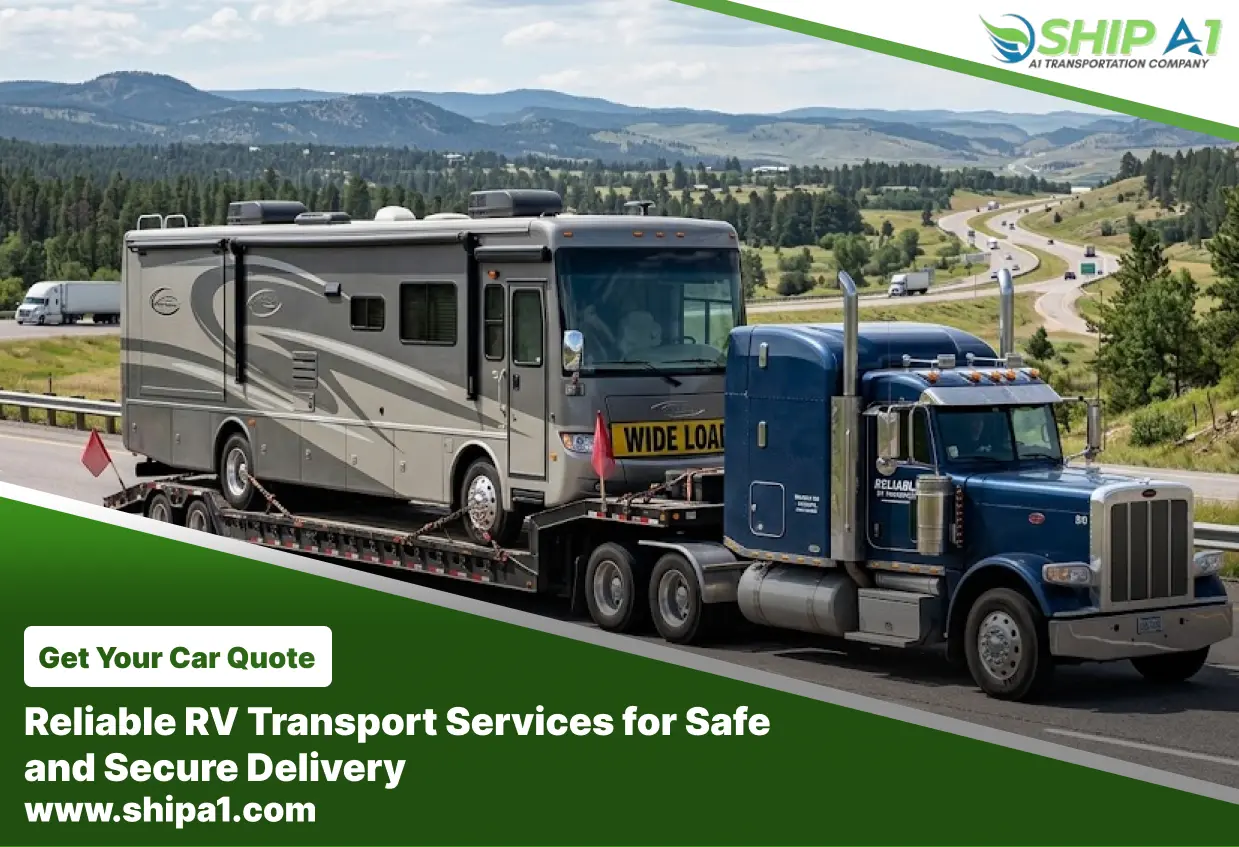
Ship A1 provides nationwide RV transport for motorhomes, travel trailers, fifth wheels, and campers. Most moves cost about $1.50-$4.00 per mile, depending on distance, RV size, transport method, route, and seasonal demand.
Reliable RV Transport for State-to-State Moves
Moving an RV between states can be difficult when the distance is long, the RV is oversized, or you simply do not want to put thousands of miles on it. Professional RV transport services provide a practical way to move motorhomes, travel trailers, fifth wheels, and other recreational vehicles.
Ship A1 Auto Transport arranges nationwide transportation across all 50 states. The service can be matched to the RV's size, dimensions, weight, condition, and route, with options ranging from open and flatbed transport to enclosed, towaway, driveaway, and specialized equipment.
Learn more about RV Transport Services.
Types of RVs Ship A1 Can Transport
Different RVs require different handling and equipment. Ship A1 can arrange transportation for a wide range of recreational vehicles.
Types of RVs Ship A1 Can Transport
| RV Type |
Typical Characteristics |
Possible Transport Approach |
| Class A Motorhome |
Large motorhomes, often 26-45 feet |
Specialized heavy equipment or driveaway service |
| Class B Motorhome |
Compact camper vans |
Driveaway or suitable transport equipment |
| Class C Motorhome |
Mid-size motorhomes with an over-cab area |
Driveaway or carrier transport |
| Travel Trailer |
Bumper-pull towable RV |
Towaway or trailer transport |
| Fifth Wheel |
Large trailer with a raised front section |
Specialized towaway equipment |
| Truck Camper / Pop-Up |
Compact or folding camping units |
Equipment based on dimensions and configuration |
Whether you are shipping an RV cross country, moving a camper locally, or arranging a state-to-state relocation, the transport method should be selected according to the RV and route.
RV Shipping and Transport Options
Open and Flatbed Transport
Open or flatbed transportation is a common choice for many RV shipments. The RV is moved on suitable open equipment, which can provide an efficient solution for standard transport needs.
You can learn more about Open Car Transport.
Enclosed Transport
Enclosed transportation places the RV inside protective equipment and may be considered for higher-value, specialty, or particularly weather-sensitive units. Because it requires specialized equipment, it can cost more than standard open transport.
Towaway Service
Towaway service can be used for roadworthy travel trailers, fifth wheels, and other towable RVs. A suitable heavy-duty vehicle connects to the RV and moves it to the destination.
Driveaway Service
Driveaway service is designed for drivable motorhomes. A professional driver operates the RV and delivers it along the agreed route.
Specialized Transport
Oversized or extra-tall RVs may require equipment such as lowboy or drop-deck trailers. Dimensions, weight, clearance, and accessibility all influence the equipment choice.
Ship A1 can also arrange different delivery methods, including Door-to-Door Auto Transport and Terminal-to-Terminal Vehicle Transport.
How Much Does It Cost to Transport an RV?
The cost of moving an RV depends on several variables rather than a single fixed rate. Distance is important, but so are the RV's size, weight, condition, route, transport method, fuel costs, and seasonal demand.
Ship A1's general pricing guidance falls within these ranges:
General RV Transport Rates
| Distance / Move |
General Rate or Total |
| 0–100 miles |
$2.50-$4.00 per mile |
| 100–500 miles |
$2.00-$3.00 per mile |
| 500+ miles |
$1.50-$2.00 per mile |
| Local RV moves |
About $400-$800 total |
| Cross-country RV moves |
About $1,000-$5,000 total |
These figures are general estimates rather than guaranteed quotes. A larger Class A motorhome, difficult pickup location, oversized dimensions, or specialized equipment can increase the final price.
The easiest way to check route-specific pricing is to use the RV Shipping Calculator.
What Affects RV Transport Rates?
Several factors can change RV transport rates per mile and the final shipping cost:
Distance and route: Longer shipments often have a lower cost per mile, while remote locations or difficult routes may require additional planning.
RV size and weight: Larger motorhomes and oversized units need more carrier capacity and may require specialized equipment.
Transport method: Standard open equipment may be more economical than enclosed or specialized transport.
Condition: A non-running RV may need loading equipment that is not required for a fully operational unit.
Season and fuel costs: Market conditions, fuel prices, and seasonal demand can affect available rates.
For more information, read Ship A1's Reliable RV Shipping Services and RV Delivery Cost Guide.
How the RV Transport Process Works
The RV shipping process starts with a quote based on your pickup and delivery locations and the details of the RV.
After reviewing the transport options, you can schedule the shipment and provide important information such as the RV's year, make, model, dimensions, weight, and operating condition. Before pickup, the RV should be prepared and inspected. The carrier records its existing condition, loads it using the appropriate equipment, and secures it for transportation.
At delivery, inspect the RV carefully before signing the delivery documentation. Any damage or condition changes should be documented at that time.
How to Prepare an RV for Shipping
Good preparation can make loading and delivery easier.
Remove valuables and personal belongings before pickup. Secure cabinets, doors, windows, vents, and slide-outs. Retract awnings and secure or remove antennas, satellite dishes, and other loose exterior accessories. Check tire condition and look for leaks or mechanical issues. Follow the carrier's instructions for fuel, propane, batteries, and water tanks. It is also helpful to take clear photographs of the RV from all sides before transport. These photos provide a record of the vehicle's condition before loading.
Custom roof equipment, solar panels, satellite systems, and other modifications should be disclosed during the quoting process because they can affect overall height, clearance, loading requirements, and cost.
Safe and Secure RV Delivery
Safe RV transportation services depend on choosing suitable equipment and planning a route that can accommodate the RV's dimensions. Professional carriers use appropriate loading and securing procedures to keep the unit stable during transit. A pre-transport inspection documents its condition before departure, while delivery documentation provides a record at the destination. Ship A1 arranges transportation through professional carriers that maintain transit cargo liability coverage. Customers should review the assigned carrier's insurance details and coverage limits before loading.
For non-running RVs, specialized equipment can be used when necessary. The correct method depends on the unit's condition, size, weight, and accessibility.
How Long Does RV Transport Take?
Transit time depends on mileage, route, weather, traffic, carrier scheduling, and pickup and delivery conditions. Local moves may take approximately 1-3 days, while cross-country or nationwide transportation can take around 7-14 days. Expedited service may be available when a shorter delivery window is needed.
Planning ahead can provide more flexibility when transporting an RV during busy travel or moving seasons.
Frequently Asked Questions
How much does it cost to transport an RV?
The cost commonly falls between about $1.50 and $4.00 per mile. The final price depends on the RV's size, type, distance, route, transport method, condition, and current market factors.
Can you transport non-running RVs?
Yes. Non-running RVs can often be transported using flatbed, lowboy, or other specialized equipment. The appropriate solution depends on the RV's condition, dimensions, weight, and pickup location.
Is insurance included when shipping my RV?
Ship A1 works with carriers that maintain transit cargo liability coverage. Coverage details and limits can vary by assigned carrier, so customers should verify the specific policy before pickup. Any damage should be documented on the Bill of Lading at delivery.
Will onboard solar panels or custom roof equipment affect loading or cost?
They can. Solar panels, satellite dishes, antennas, and other roof-mounted equipment may change the RV's height and clearance requirements. These features should be disclosed when requesting a quote so the appropriate equipment can be selected.
How much does RV transport cost?
RV transport rates vary according to mileage, RV dimensions, transport method, route, season, fuel costs, and special handling requirements. General Ship A1 estimates range from approximately 1.50–4.00 per mile.
What are the options for shipping my RV?
Options can include open or flatbed transport, enclosed transport, towaway service, driveaway service, specialized equipment, door-to-door delivery, and terminal-to-terminal delivery. The right option depends on the RV and route.
Transport Your RV With Ship A1
Whether you need to move a motorhome, travel trailer, fifth wheel, or camper across state lines, professional transportation can eliminate the need for a long-distance drive.
Ship A1 provides nationwide RV transport and RV shipping services with transportation options based on your RV, route, and delivery needs. Request a custom RV transport quote to get started.