Quick Answer
Ship A1 can transport all types of non-running vehicles using available transport methods and specialized equipment when needed. Costs vary by vehicle condition, distance, method, access, and equipment. A $150 fee applies if the vehicle becomes inoperative at pickup or during transport.
Shipping a vehicle that does not run requires more planning than transporting an operational car. A vehicle may be non-running because of engine failure, a dead battery, accident damage, or another mechanical issue. However, being unable to drive does not mean the vehicle cannot be transported.
The key is to explain the vehicle's exact condition before pickup. This helps the transport company prepare for the proper loading process and equipment.
Can You Ship a Non-Running Vehicle?
Yes. Ship A1 transports all types of non-running vehicles using available transport methods. The loading process depends on the vehicle's condition and how much assistance is needed to move it onto the carrier.
A vehicle may not start but still roll and steer normally, while another may have locked wheels, damaged suspension, flat tires, or severe accident damage. These differences can affect the loading requirements.
When booking transportation, explain whether the vehicle starts, rolls, steers, and brakes. Also mention accident damage, flat tires, locked wheels, fluid leaks, or other mechanical problems.
How to Ship a Non-Running Vehicle
1. Explain the Vehicle's Condition
Start by telling the transport company that the vehicle is non-running. Explain why it does not run and whether it can still roll, steer, or brake.
2. Arrange the Proper Loading Equipment
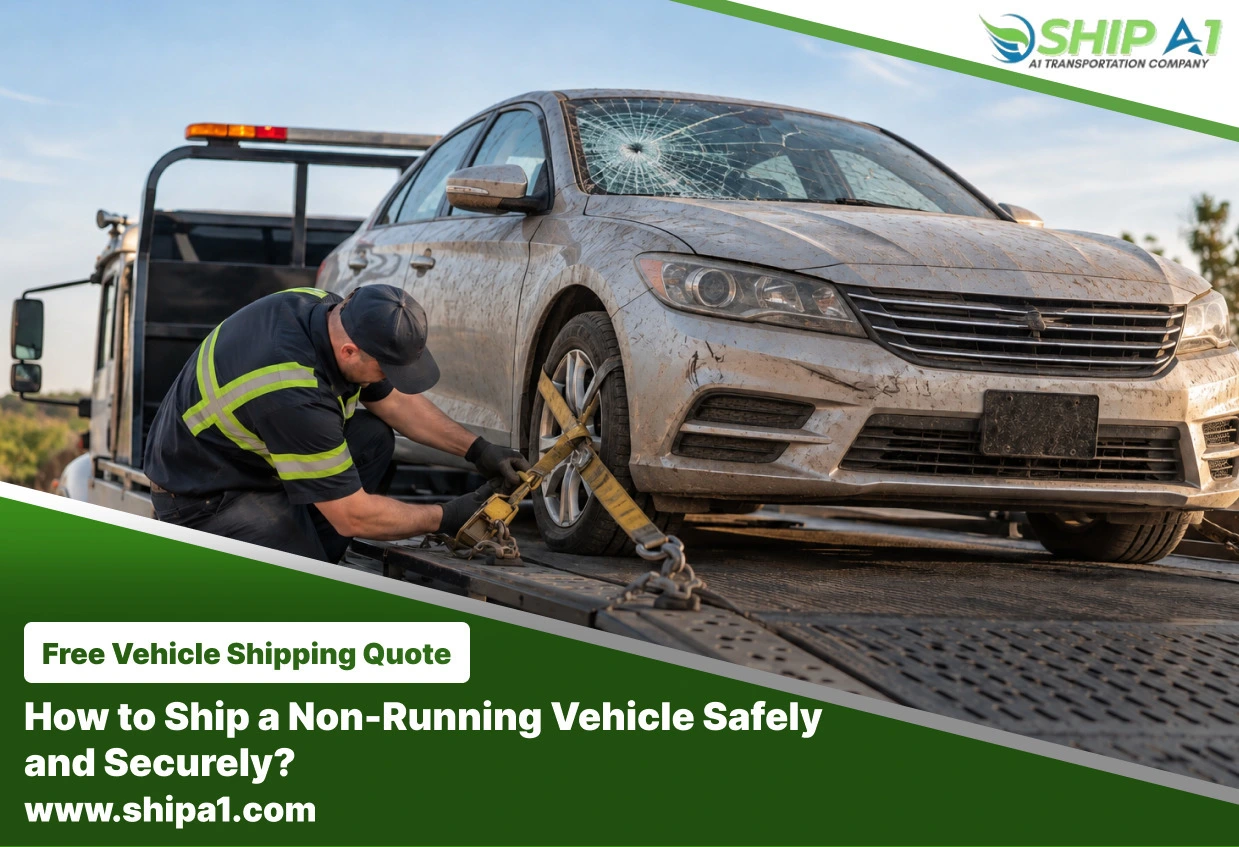
A non-running vehicle cannot always be driven onto a carrier, so specialized equipment may be necessary. Depending on its condition, loading may require a winch, liftgate, or forklift.
3. Choose the Right Transport Method
Ship A1 can transport non-running vehicles using its available transport methods. Open transport can be suitable for many standard vehicles, while enclosed transport may be preferred for collector cars, project vehicles, or higher-value vehicles needing additional protection.
Door-to-door transport may also be available when pickup and delivery locations can be safely and legally accessed by the carrier.
Explore Ship A1 transport services to review available options.
4. Confirm Pickup and Delivery Access
Access is particularly important when shipping a non-running vehicle because loading equipment and a large carrier may need additional room.
Ship A1 provides door-to-door service as close to the specified address as legally and safely possible. If the exact location cannot accommodate the carrier, a nearby accessible location may be required.
5. Document the Vehicle's Condition
Before loading, inspect the vehicle and take clear photographs from multiple angles. Document existing dents, scratches, accident damage, tires, wheels, windows, mirrors, and interior condition.
The vehicle's condition should also be recorded on the Bill of Lading (BOL) during pickup. Inspect it again at delivery and document any transit-related damage before completing the handover.
What Equipment Is Used to Ship a Non-Running Vehicle?
The equipment required depends on the vehicle's condition. A vehicle that does not start but still rolls may need less assistance than one with locked wheels or severe damage.
Possible Loading Equipment by Vehicle Condition
| Vehicle Condition |
Possible Loading Equipment |
| Does not start but rolls |
Winch or assisted loading equipment |
| Limited movement or steering |
Specialized loading assistance |
| Locked wheels or cannot roll |
Lift equipment, forklift, or other specialized equipment |
| Severe damage or completely immobile |
Specialized loading arrangements based on condition |
The final loading method depends on the actual vehicle and the equipment available to the assigned carrier.
How Much Does It Cost to Ship a Non-Running Vehicle?
There is no single price for every non-running vehicle. The final cost can depend on shipping distance, vehicle size and condition, transport method, route, accessibility, and equipment needed for loading.
A non-running vehicle may require additional handling compared with a vehicle that can drive onto the carrier, so complete vehicle information is important when requesting a quote.
Ship A1's Non-Operable Vehicle Fee policy states:
If the vehicle becomes inoperative due to mechanical issues or other reasons at the time of pickup or during transport, a $150 non-operable vehicle fee will be assessed at the time of delivery.
This does not mean every vehicle identified as non-running automatically receives the $150 charge. The stated policy applies when the vehicle becomes inoperative at pickup or during transport.
How to Prepare a Non-Running Vehicle for Shipping
Before pickup, focus on these key preparation steps:
- Remove personal belongings and loose items because standard transport cargo insurance generally does not cover personal property.
- Secure or remove loose mirrors, spoilers, antennas, accessories, and other components that could interfere with loading.
- Tell the transport company about fluid leaks, damaged wheels, flat tires, or other conditions that could affect loading.
- Keep necessary keys and required vehicle documentation available.
- Take clear photographs of the vehicle before loading and compare its condition again at delivery.
For additional information, review the guide to documents required to ship a car to another state.
Is a Non-Running Vehicle Insured During Transport?
Ship A1 arranges transportation through assigned motor carriers, and the physical carrier handling the shipment provides the primary transit insurance and cargo liability coverage for the vehicle during transportation.
The vehicle's condition should be inspected and recorded on the Bill of Lading at pickup and checked again at delivery. Any transit-related damage should be documented on the delivery inspection and handled through the assigned carrier's claims process.
Personal belongings are generally not covered by standard transport cargo insurance, so they should be removed before loading.
For more information, visit the Ship A1 Auto Transport - Frequently Asked Questions.
Can a Non-Running Vehicle Be Shipped Door to Door?
Yes, when the pickup and delivery locations can be safely and legally accessed by the carrier.
Door-to-door service does not always mean the transport truck can reach the exact point where the vehicle is parked. Non-running vehicles may require additional loading space, and the driver must be able to position the carrier and equipment safely.
Discuss difficult access conditions with the transport company before pickup to help avoid delays or last-minute changes.
Common Reasons to Ship a Non-Running Vehicle
People ship non-running vehicles for many reasons, including engine or mechanical failure, dead batteries, accident damage, classic or collector cars, project vehicles, auction purchases, vehicles being moved to repair facilities, and long-term stored vehicles.
Whatever the reason, the vehicle's exact condition should be disclosed before transportation so the shipment can be properly planned.
Tips for Safe Non-Running Vehicle Transport
The safest approach is to plan around the vehicle's actual condition rather than treating it like a standard operational car. Tell the transport company whether the vehicle starts, rolls, steers, and brakes, and disclose any locked wheels, flat tires, leaks, accident damage, or missing components.
Take photographs before pickup, review the Bill of Lading, confirm pickup and delivery details, and make sure there is enough space for the carrier and loading equipment.
Ship A1 for Non-Running Vehicle Transport
Shipping a vehicle that does not run can be straightforward when its condition is accurately communicated and the proper loading arrangements are made.
Ship A1 transports all types of non-running vehicles using available transport methods and can arrange specialized loading solutions when needed. Preparing the vehicle, confirming location access, documenting its condition, and understanding the applicable fee and insurance procedures can help make the process safer and more predictable.
When you are ready to ship your non-running vehicle, request a quote from Ship A1 Auto Transport.
Frequently Asked Questions
Can You Ship a Car That Does Not Run?
Yes. Ship A1 transports non-running vehicles, including vehicles that cannot start or move under their own power. Specialized loading equipment may be required depending on the vehicle's condition.
Does a Non-Running Vehicle Need to Roll and Steer?
Not necessarily. The vehicle's ability to roll, steer, and brake helps determine the loading requirements, but non-running vehicles can still be transported with the appropriate arrangements and equipment.
How Much Does It Cost to Ship a Non-Running Vehicle?
The cost depends on distance, vehicle condition, transport method, accessibility, and required loading equipment. A $150 non-operable vehicle fee applies when the vehicle becomes inoperative at pickup or during transport.
What Equipment Is Used to Load a Non-Running Vehicle?
Depending on its condition, a non-running vehicle may require specialized equipment such as a winch, liftgate, or forklift.
Can a Non-Running Vehicle Be Shipped Door to Door?
Yes, when the pickup and delivery locations are safely and legally accessible to the carrier. Otherwise, the driver may need to use the nearest suitable location.
How to Register a Non-Operational Vehicle in California?
Registering a non-operational vehicle in California is a DMV process and is separate from shipping or transporting the vehicle. Owners should check the California DMV requirements for placing a vehicle on non-operational status and understand when the vehicle can legally be driven again.