
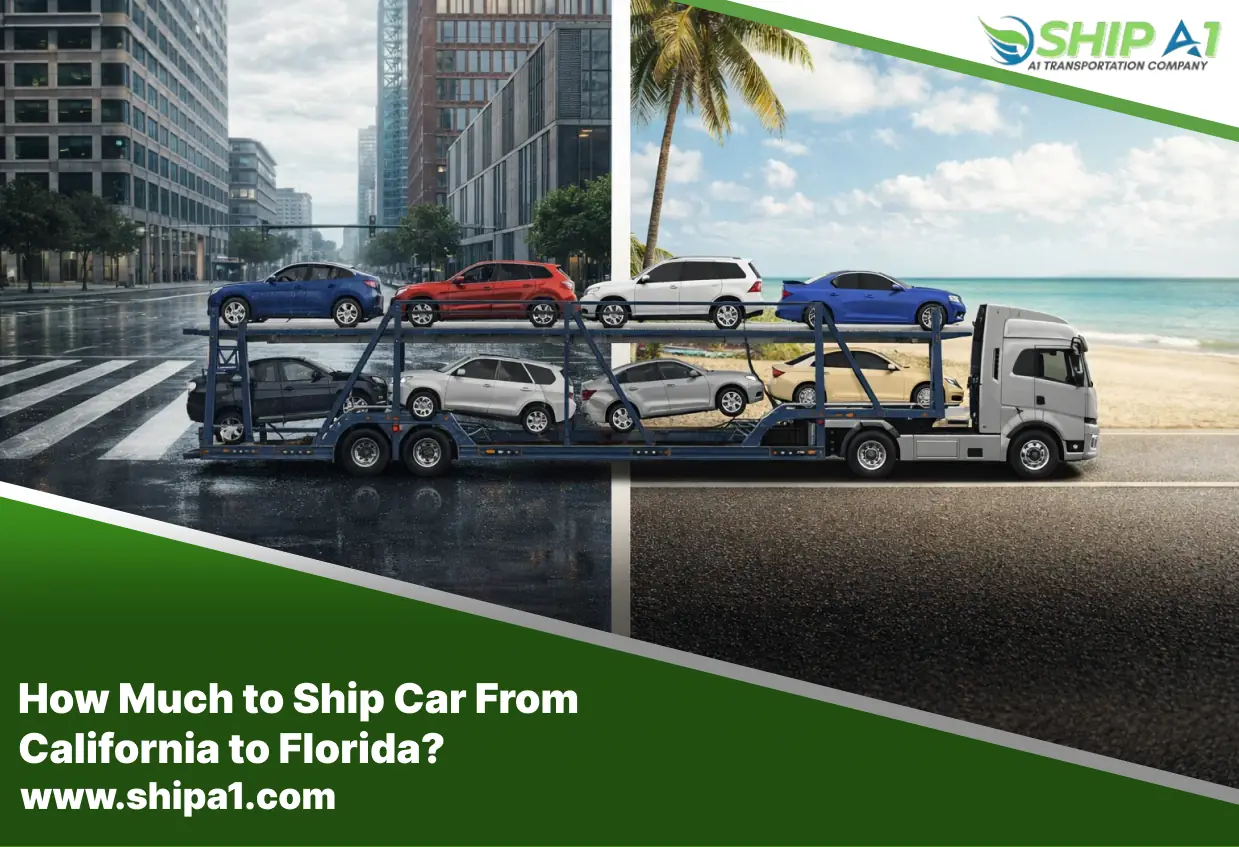
The cost to ship a car could be around $1,200 to $2,300 depending on the route and transport type. Cost can also vary based on the vehicle's size and condition, pickup and delivery locations, open or enclosed transport, time of year, and carrier availability. Open transport is generally the more economical choice for standard vehicles, while enclosed transport usually costs more and provides additional protection.
California to Florida car shipping is common for relocations, seasonal travel, online vehicle purchases, college moves, and family vehicle transfers. Because this is a long-distance route, the final price and delivery time depend on the vehicle, exact locations, transport method, carrier availability, and shipping dates.
For a more detailed explanation of interstate pricing, see our guide on how much it costs to ship a car to another state.
Average Cost and Factors That Affect Shipping Price
There is no single price for every California-to-Florida shipment. A sedan, SUV, truck, classic car, and non-running vehicle can have different transportation requirements.
| Cost Factor | How It Can Affect Shipping |
|---|---|
| Distance and Route | Exact pickup and delivery cities determine mileage and carrier route requirements. |
| Vehicle Size and Weight | Larger and heavier vehicles can occupy more carrier space and may require different transportation arrangements. |
| Vehicle Condition | Non-running vehicles may require additional loading equipment. |
| Transport Method | Open transport is generally less expensive than enclosed transport. |
| Pickup and Delivery Locations | Rural addresses, narrow streets, gated communities, and restricted-access areas can require additional coordination. |
| Season and Demand | Busy relocation and travel periods can affect carrier availability. |
| Scheduling | Flexible dates can provide more options than last-minute or highly specific pickup requests. |
When requesting a quote, provide accurate vehicle and route information so the estimate reflects your actual shipment.
Popular California to Florida Car Shipping Routes
The exact route matters because California and Florida are large states. Common city-to-city shipments include:
- Los Angeles to Miami
- Los Angeles to Orlando
- Los Angeles to Tampa
- San Diego to Orlando
- San Diego to Miami
- San Francisco to Tampa
- San Francisco to Miami
- Sacramento to Jacksonville
Your final quote should be based on the specific pickup and delivery locations rather than simply selecting California and Florida as states.
How Long Does It Take to Ship a Car From California to Florida?
Many California-to-Florida shipments take about a week or more, but the actual transportation window varies. Pickup scheduling, carrier availability, traffic, weather, route conditions, vehicle type, and delivery accessibility can all affect timing.
The overall shipping period can also include the time needed to arrange a carrier before the vehicle begins its journey. If you have a firm move-in date, work start date, or other deadline, communicate it when requesting your quote.
That's why it's better to compare the complete transportation requirements rather than looking only at the distance between California and Florida.
Ready to find out how much your California to Florida car shipment may cost? Get a transportation plan from Ship A1 Auto Transport based on your vehicle, route, transport method, and preferred timeframe.
Request a QuoteHow California to Florida Car Shipping Works
The process normally follows several steps, beginning with the quote and continuing through carrier coordination, pickup, transportation, and delivery.
- Request a quote: Provide your route, vehicle details, condition, and preferred dates.
- Book the shipment: Confirm the transportation service and pickup window.
- Carrier assignment: A carrier is coordinated for the route and vehicle requirements.
- Pickup and inspection: The vehicle is inspected and its existing condition is documented.
- Transportation: The vehicle is loaded and transported toward Florida.
- Delivery inspection: Check the vehicle again at delivery and compare its condition with the pickup documentation.
For a broader explanation of interstate shipping, read how to ship a car to another state.
Open vs. Enclosed Auto Transport
Open transport is commonly used for standard cars, SUVs, and other everyday vehicles. It is generally the more economical option and is widely available.
Enclosed transport places the vehicle inside a covered trailer, providing additional protection from weather and road debris. It may be preferred for luxury, classic, exotic, collector, or other high-value vehicles.
The right option depends on the vehicle, protection requirements, budget, and scheduling needs.
Door-to-Door vs. Terminal-to-Terminal Shipping
Door-to-door service is designed to make pickup and delivery more convenient. The carrier picks up and delivers the vehicle as close as safely and legally possible to the requested addresses.
However, a large carrier may not be able to enter narrow residential streets, gated communities, apartment areas, or other restricted locations. In those situations, the driver may arrange a nearby safe meeting point.
Terminal-to-terminal transportation requires the customer to take the vehicle to a designated facility and collect it from another facility. It can be useful when direct address access is difficult, but it requires additional travel by the vehicle owner.
California Pickup and Florida Delivery Locations
California pickup locations can include Los Angeles, San Diego, San Francisco, San Jose, Sacramento, Fresno, Oakland, and Long Beach. Florida delivery areas can include Miami, Orlando, Tampa, Jacksonville, Tallahassee, Fort Lauderdale, St. Petersburg, and Port St. Lucie.
Availability depends on the exact address and carrier access. If a carrier cannot safely reach the requested address, an alternative nearby location may be arranged.
Best Time to Ship a Car From California to Florida
Shipping demand changes throughout the year. Summer relocation activity and seasonal travel can increase demand, while winter also has its own travel patterns.
If your schedule allows, provide more than one possible pickup date. Flexibility can give carriers more scheduling options. Booking ahead can also give you more time to compare services and prepare your vehicle.
For more information, see our guide to car moving season.
How to Prepare Your Car for Shipping
Before pickup, take several basic steps to prepare the vehicle and make the inspection process easier.
- Remove personal belongings and valuables.
- Wash the vehicle so existing damage is easy to identify.
- Photograph scratches, dents, chips, and other existing damage.
- Check tires and look for fluid leaks.
- Disable alarms and secure loose accessories.
- Prepare the necessary keys.
- Tell the transportation provider about mechanical problems.
The vehicle's condition should be documented before loading and checked again at delivery.
Insurance and Vehicle Inspection
Ask about the carrier's insurance coverage before booking and review applicable limits, exclusions, and claim procedures. Do not assume every type of damage is automatically covered.
The pickup inspection and Bill of Lading provide an important record of the vehicle's condition. At delivery, inspect the vehicle before completing the process. If you notice new damage, document it and follow the applicable claim procedure.
Non-Running, Expedited, and Specialty Vehicle Shipping
A non-running vehicle may still be transportable, but it can require specialized loading equipment. Tell the provider beforehand if the vehicle cannot start, roll, steer, or brake normally.
Customers with firm deadlines can also ask about expedited shipping. Expedited service may involve additional costs because the shipment may require priority scheduling.
For luxury, classic, exotic, or collector vehicles, enclosed transport may be preferred because it offers additional protection and can better suit specialized transportation requirements.
How to Get an Accurate Car Shipping Quote
Provide your exact pickup and delivery locations, vehicle year, make and model, condition, preferred dates, and desired transport method. Be accurate about the vehicle's condition and any special requirements.
You can request an instant car shipping quote to begin the process.
When comparing providers, look beyond the headline price. Consider the transportation method, insurance information, pickup and delivery process, communication, estimated timeline, reviews, and payment or cancellation terms. You can also learn more about finding a reliable car shipping service.
Frequently Asked Questions About California to Florida Car Shipping
What is the cheapest way to ship a car from California to Florida?
Open transport is generally the more economical option for standard vehicles. Flexible pickup dates may also provide more scheduling options, but the final price depends on the specific shipment.
Can I ship a non-running car?
Yes, non-running vehicles may be transportable, but they can require specialized loading equipment. Always disclose the vehicle's condition before pickup.
Is open transport safe?
Open transport is commonly used for standard vehicles. It does expose the vehicle to normal outdoor conditions, so enclosed transport may be preferable when additional protection is important.
Can I put personal items in my car?
Policies vary between transportation providers. Ask about current rules, weight limits, and liability before placing belongings inside the vehicle.
How far in advance should I book?
Booking ahead can provide more scheduling flexibility, especially if you have a specific pickup date or delivery deadline.
Is my car inspected before delivery?
The vehicle should be documented during pickup and checked again at delivery. Compare the condition at both stages and document any concerns.
Final Thoughts
California to Florida car shipping becomes easier to plan when you understand the factors that affect price, timing, transportation method, preparation, and delivery. Open transport can suit many standard vehicles, while enclosed transport may be appropriate for vehicles requiring additional protection.
Providing accurate information, planning ahead, documenting your vehicle's condition, and comparing complete transportation details can help you arrange your shipment with fewer surprises.