Last Updated:
May 08, 2026
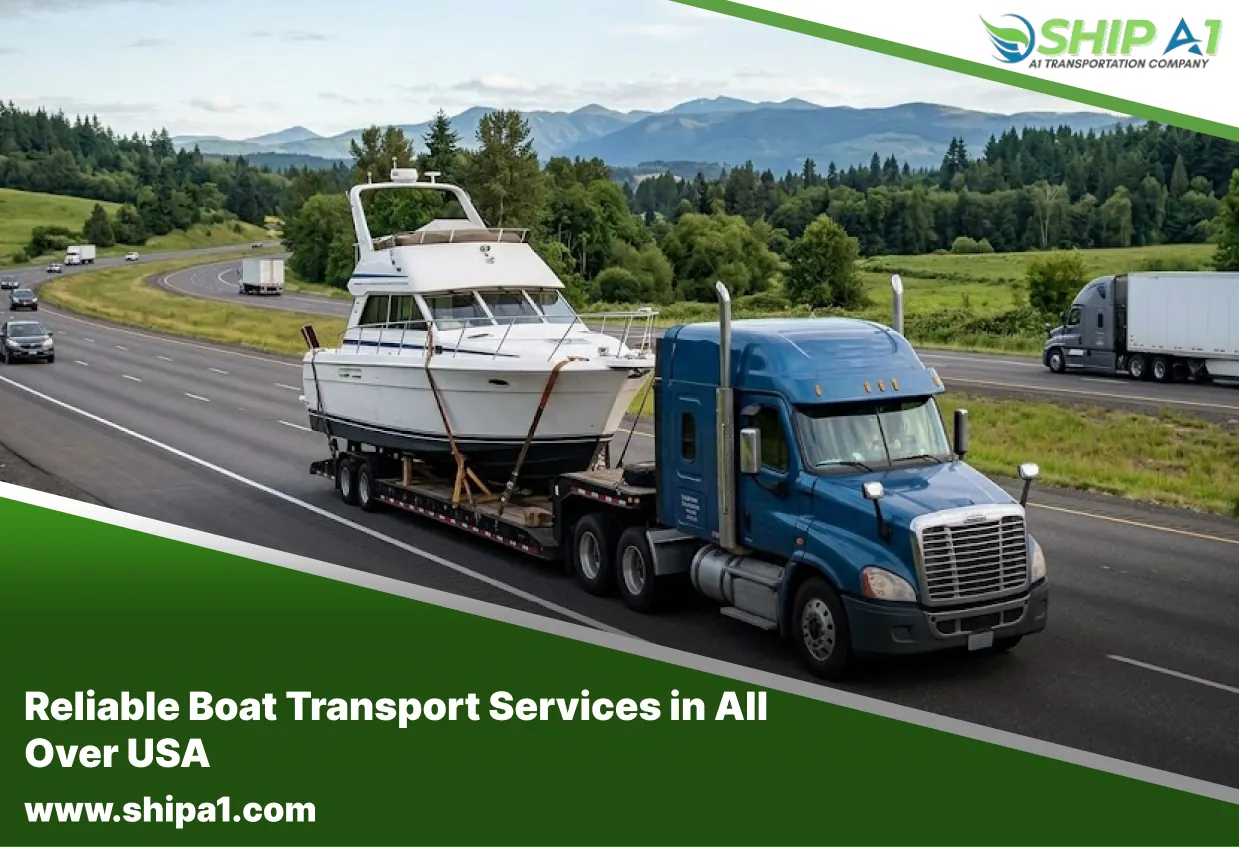
Transporting a boat across the country takes good planning, accuracy and the correct logistics partner. Whether you have a fishing boat, luxury yacht, speedboat or sailing vessel, professional boat hauling services can help you make the process easier and help to preserve your investment. Numerous owners try to arrange the shipping themselves, but without experience in the industry, it may lead to delays and unnecessary costs due to issues with permits, trailer compatibility, insurance coverage, and route planning.
That's why thousands of boat owners trust companies like Ship A1 Auto Transport for safe countrywide boat hauling support. Professional carriers are aware of the procedures at the marina, oversized load requirements, and scheduling challenges that can be affected by the weather.
Why Professional Boat Shipping Matters
Boat hauling is much more complex than regular vehicle hauling. The size of a marine vessel is very different from one another, as are the height and weight of each, and the structure of each vessel. It is possible for a small fishing boat to be carried on a lightweight trailer, or for a cabin cruiser to need a hydraulic system and escort vehicles.
Risks are mitigated by professional transport companies who oversee route compliance, loading safety and the use of protective securing techniques. This will reduce vibration damage, cosmetic damage and delays to operations during long distance movements.
Choosing the Right Carrier for Nationwide Delivery
All traders don't have all of the gear required for marine trading. Make sure that the carrier is used for boats, not for general cargo before it is booked. Businesses that are experienced in the maritime field are more accustomed with hull protection, shrink wrapping and balancing procedures for trailers.
The trustworthy provider will supply:
Licensed and insured transportation
Transparent scheduling
GPS shipment tracking
DOT-compliant hauling equipment
Oversized permit handling
Experienced marine operators
Customer feedback can also be used to gauge if the firm can keep to its vessels' deadlines and safety standards regularly.
Understanding Different Transport Methods
The method of transport typically used by boat owners involves either trailer transportation, flatbed hauling or water-to-water delivery based on the size of the vessel and its destination.
Trailer-Based Shipping
This approach is used for smaller boats or recreational vessels. The boat is still securely on a trailer throughout its transit across highways to the marina or storage facility at its final destination.The boat will stay on a trailer during transportation across the highways to its final marina or storage home.
Flatbed Transport
For larger vessels, there may be a need for flatbed trailers with some sort of hydraulic loading system. This is useful for large boats crossing state lines.
Water Delivery Services
Owners favor water-based, captained marine transportation over highway transportation. Water delivery can be longer and is subject to weather conditions for some routes, but is feasible for others.
Factors That Influence Pricing
Final shipping rates are dependent upon a number of factors. Knowing these facts allows owners to set up reasonable transportation budgets before picking up.
Boat Dimensions
Permit requirements and trailer types are directly related to length, width and height. Larger vessels will need more coordination and could charge more overall.
Transport Distance
The main reason cross country hauling is more expensive than regional hauling is because the distance traveled requires more fuel, labor time and complexity to complete.
Seasonal Demand
The boating season is high in both spring and summer across the United States. These months are in the height of the shipping season and are a time of increased demand and restricted availability and pricing.
Choose to deliver or pick up from a location that is accessible.
If you have remote marinas or steep ramps, or your loading situation is challenging, you need more operational requirements and longer scheduling periods.
Preparing Your Boat for Transport
To avoid unnecessary transit problems, it is essential to be prepared. Owners are advised to thoroughly check the vessel and make a picture inventory before picking up.
These are important preparation steps:
Remove loose accessories
Keep electronic devices and antennas secure.
Empty water tanks when necessary
Disconnect batteries
Monitor the pressure in the trailer tires.
Properly cover exposed areas
The unnecessary weight will also help in the stability of the transport while hauling them for long distances.
Benefits of Insured Marine Transport
One of the most crucial factors for having professional carriers is insurance protection. Road hazards and weather conditions can introduce unforeseen dangers on the road regardless of the skill of the operators.
Any reputable business offers cargo insurance coverage, so you can rest assured that your boat is covered in case of any incident that is deemed to be under the definition of transit. Prior to signing up, request proof of live insurance and make sure to read coverage restrictions thoroughly. Owners should also consider their own personal marine insurance policy to find out if additional transport insurance is required.
Importance of Accurate Scheduling
The timing is crucial to the success of marine delivery. There are many marinas that have less availability for crane and launch times or unloading windows. These logistic co-ordinations avoid the wastage of storage time, which is expensive.
Estimated pick-up and delivery times are generally given by professional carriers, and they take into account aspects such as route demand, weather conditions and permit approvals. Flexibility can help improve the efficiency of scheduling and to minimize transportation costs.
Open vs Enclosed Boat Shipping
Most boats are on open trailers because the marine vessel is built to withstand outdoor conditions. But for luxury yachts, rare collector yachts, and extremely sensitive yachts, enclosed transport might be the right solution.
Enclosed hauling offers extra protection from road debris, exposure to rain and prolonged exposure to sun during the longer travel distances. It costs more, but can offer peace of mind to the owners of high quality boats.
State Regulations and Oversized Permits
Each state has its own rules and regulations for oversized marine loads. Carriers may require permits to transport boats that are larger than state width and height regulations.
Requirements for permits might be:
Professional freight companies manage these duties with care and effectiveness, avoiding legal repercussions or shipment delays.
Common Mistakes Boat Owners Should Avoid
Failure to adequately prepare and selecting inexperienced carriers are the cause of many transport problems. You can save money and your boat by avoiding these common mistakes!
Only accept bookings based on price
The low cost providers might not have the proper insurance, marine equipment or qualified operators. Low cost can sometimes be high cost in the long run.
Ignoring Documentation
Owners should never take any chances by allowing shipments without checking contracts, insurance or inspection reports.
Migrating to peak season.
Seeking a booking at the last minute during busy months can leave you with less flexibility in scheduling the booking and higher prices.
How Technology Improves Marine Shipping
The modern transport providers are utilizing advanced logistics systems for the improvement of efficiency and communication, all along the shipping process.
GPS tracking enables owners to know exactly where their shipment is at any given moment and digital logs record a vessel's condition prior to and upon completion of the shipment. Route optimization software also contributes to better fuel usage and delivery accuracy. This progress will enable customers to be informed about their order and will minimize operational delays on long-distance routes.
Why Experience Matters in Boat Hauling
Riding a boat is not the same as driving a truck. Drivers need to familiarize themselves with weight balance, hull sensitivity, trailer setting up and how to properly tie off to avoid in-transit movement.
Experts with years of marine logistics experience can expect issues on the road in advance, weather problems, and permit issues, etc. This knowledge helps to make boat owners safe and avoids unnecessary stress for boat owners. Ship A1 Auto Transport employs highly trained individuals who have the knowledge of moving things around the country and moving oversized vehicles.
Cost Planning for Long-Distance Boat Delivery
Before arranging for transport, owners should ask for a detailed breakdown of prices. Clear pricing brings about clear expectations and what services are covered.
The following may be included in a complete quote:
Fuel charges
Permit fees
Escort services
Insurance coverage
Trailer usage
Loading assistance
You can use a boat transportation cost calculator to get a general idea prior to contacting the transport coordinator. Prices will typically hinge on the specific dimensions of the vessel and the route it will travel, though.
Another customer question on comparing regional vs cross country transport is the cost of transport for the boat. Although shorter routes might seem more affordable in the beginning, permit size and accessibility issues can influence overall costs.
Final Thoughts
Owning a boat and shipping it across the United States is convenient, safe and efficient with the help of professional marine shipping services. They ease a process that otherwise requires a lot of logistical planning with simple permit coordination and secure loading procedures.
Selecting a reputable transport company, setting up the ship properly, and grasping the pricing factors can facilitate a hassle-free delivery process from collection to destination.
FAQs
How long does nationwide boat shipping usually take?
Delivery timelines depend on distance, route conditions, permit approvals, and seasonal demand. Most cross-country shipments require several days to two weeks.
Can large yachts be transported over highways?
Yes, oversized yachts can travel legally with proper permits, escort vehicles, and specialized trailers designed for marine hauling.
Is marine transport insurance included automatically?
Most professional carriers include cargo insurance, but coverage limits vary. Always verify policy details before booking.
Do I need to drain fuel before transport?
Some carriers request reduced fuel levels for safety and weight management purposes. Requirements differ depending on vessel size and route regulations.
What is the safest way to protect a boat during shipping?
Removing loose accessories, securing electronics, and using protective coverings significantly reduce transit-related risks.